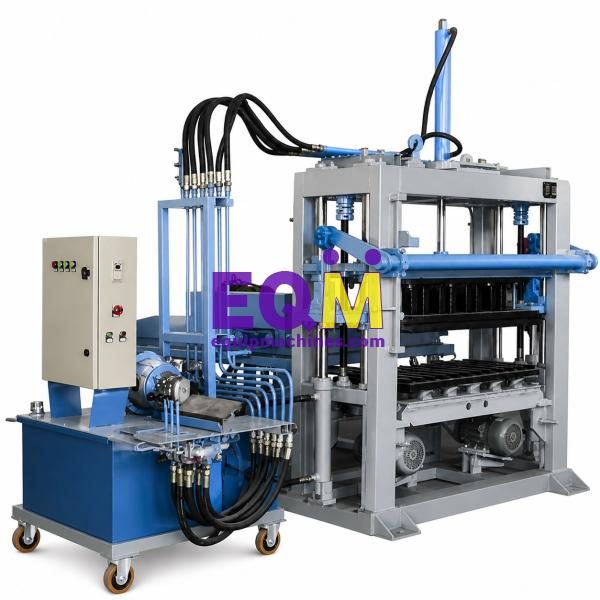
We supply interlocking stabilised soil block machines to housing programmes, community projects, contractors and small producers across Africa.
The range covers manual lever-operated presses, hydraulic block presses, and semi-automatic plants with soil preparation, from a few hundred blocks a day to several thousand. Moulds are supplied in the standard interlocking patterns along with plain block moulds.
The economics are what make this product attractive here. Blocks are pressed from local soil with a small percentage of cement, then cured rather than fired, so there is no kiln and no fuel cost, and the material is on site. The interlocking profile means walls are laid with minimal mortar, which cuts cement consumption again and lets semi-skilled labour build accurately. For rural housing and community buildings the saving against fired brick or transported block is substantial.
Soil selection decides whether it works. The soil needs the right balance of sand, silt and clay; too much clay and the blocks crack, too little and they crumble. A simple field test and a laboratory check should be done before any machine is bought, and we would rather see the soil report than quote blind.
Cement stabilisation is typically five to ten per cent depending on the soil, and under-dosing to save cost produces blocks that fail in the first heavy rains.
Housing programmes and community projects in Kenya, Uganda, Tanzania, Rwanda and Zambia make up most demand. Machines ship with moulds, manuals, wear parts and operator training.