
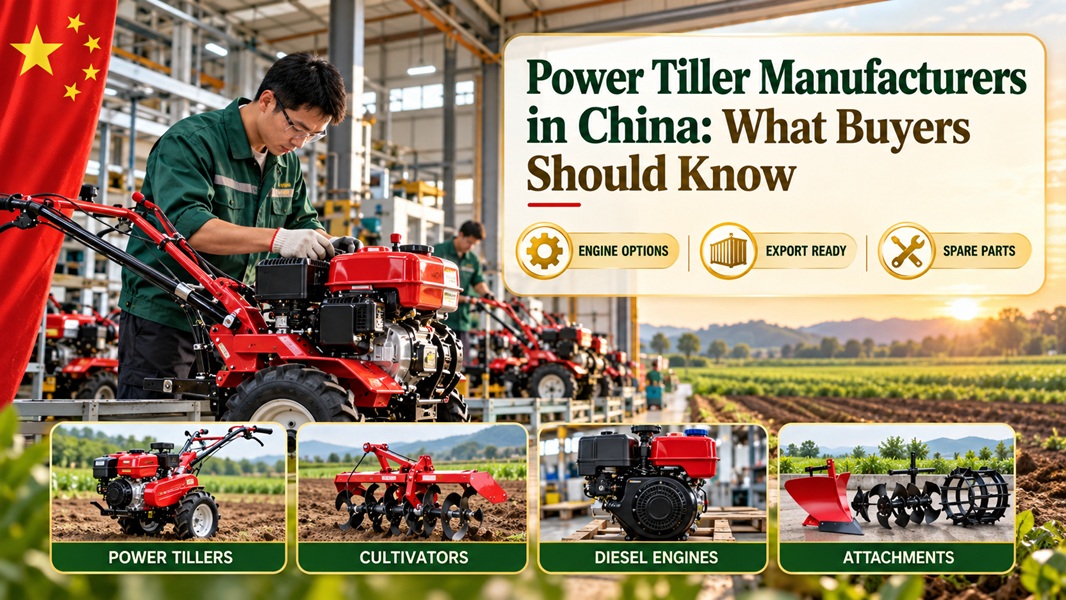
Power Tiller Manufacturers in China: What Buyers Should Know
A power tiller can be a practical machine for small fields, vegetable plots and areas where larger tractors are difficult to use. Yet two machines described as “power tillers” may differ greatly in traction, transmission, attachments and service needs. Buyers comparing power tiller manufacturers in China should begin with the soil, work cycle and operators rather than engine size alone. A clear duty profile makes it possible to ask useful questions, run a relevant demonstration and judge total ownership cost.
Describe the work and ground conditions
Write down cultivated area per day, soil texture, slope, wetness, row spacing and the tasks expected throughout the year. A light rotary cultivator used for seedbed preparation is different from a two-wheel tractor expected to pull a plough or trailer. Specify tilling width and depth, desired travel speed, turning space and whether the machine must work in puddled fields or on hard dry ground. State the operator's typical hours per shift and available fuel. If attachments are part of the purchase, list them individually and require the supplier to confirm compatible mounting and power requirements.
Look beyond the engine rating
Quoted horsepower does not tell you how effectively a tiller puts power into the soil. Ask for engine model, rated output, fuel consumption under a stated load, cooling arrangement, starting method and air filtration. Then review gearbox ratios, clutch type, final drive, axle strength, tyre or lug options and overall machine weight. A heavier unit may offer traction but be more difficult to maneuver; the right choice depends on the field. Confirm whether reverse gear is available and how the operator controls it. Request a parts diagram and identify wear items before comparing prices.
Test the machine with the intended attachment
The best evidence is a field demonstration using soil and tools similar to your operation. Where that is impossible, ask for a continuous video test that shows start-up, forward and reverse movement, turning, tilling depth and an attachment change. Have the manufacturer record working width, area covered, fuel used and any stoppages under clearly described conditions. Avoid accepting a short idle-running video as proof of field performance. For larger tenders, define a factory acceptance test and a local commissioning test, with agreed pass criteria and responsibility for correction if the machine does not meet them.
Examine safety and operator comfort
Check guarding around belts, pulleys, rotary blades and other moving parts. Controls should be reachable without awkward posture, labels should be understandable in the destination language, and the machine should stop predictably when the operator releases a required control. Ask how the tiller behaves if an attachment jams or the operator loses balance. Consider handle height adjustment, vibration, exhaust direction and noise during a realistic shift. Local safety rules differ, so identify the requirements in the destination market and obtain the relevant documentation before shipping rather than relying on a generic claim of compliance.
Confirm maintenance support before ordering
Remote farms cannot always wait weeks for a small seal or cable. Ask for recommended service intervals, lubricant specifications, a maintenance manual and a priced list of common parts: filters, belts, tines, cables, bearings, seals and clutch components. Confirm part numbers and the period for which replacements will remain available. A distributor may need technician training, a starter stock of spares and troubleshooting guidance. If the engine is a third-party model, find out whether it can be serviced locally. The purchase is easier to defend when repair time and parts cost are included in the comparison.
Audit the maker and the order process
Clarify whether the seller manufactures the frame, gearbox and attachments or assembles parts from several sources. Ask who is responsible for fit, testing and warranty on the complete machine. Review production capacity, quality checkpoints and records for serial numbers and final tests. On a sample unit, inspect welds, fasteners, leaks, belt alignment and attachment fit. Before shipment, agree a random inspection plan that includes operation, dimensions, accessories, manuals and packing. Photographs should show the actual units and crates, not only a model from an earlier order.
Price the complete delivered package
Compare quotations with the same engine, transmission, attachments, wheel set and warranty conditions. Include crating, loading, shipping, import costs and local assembly. Check whether tines and tools are installed, packed separately or sold as options. For a project order, request crate dimensions and weight for transport planning; a small difference in unit price can disappear if packaging uses container space poorly. Confirm voltage for any electric-start charger or accessory and specify the destination country's fuel and emissions requirements when applicable.
Plan distribution and end-user training
If the tillers will be resold or issued through a project, decide who will assemble and inspect each unit before handover. Provide a short operator orientation on starting, stopping, attachment changes and routine checks, with the manual in the user's language. Record serial numbers and the destination of each machine so service campaigns and parts orders can be handled quickly. The factory should identify transport locks and setup steps clearly on the crate. A machine that arrives intact but is assembled incorrectly can fail before the first season is over.
Put the specification in writing
The final purchase order should attach the approved model and component list, performance test, spare parts package, manual language, marking, inspection points and delivery date. Include a change-control clause so the manufacturer cannot substitute an engine or gearbox without approval. EquipMachines presents power tillers as two-wheel walking tractors for cultivation and farm transport. Whether you enquire there or elsewhere, send the manufacturer your field conditions and attachment list first. A reliable supplier should be able to explain how its machine will perform that particular job and how it will be kept working afterward.
Farm equipment buyers in Ethiopia, Egypt, Morocco, Algeria, Angola, Bolivia, Ecuador, Paraguay, Uruguay, and Venezuela should select Chinese power tillers for the fields and attachments they will actually serve. Tell the manufacturer about soil conditions, cultivated area, terrain, operating hours, and any ploughs, cultivators, or trailers needed. Ask for a field performance test, maintenance instructions, and prices for common spare parts. Contact us equipmachines.com For distributor or project orders, include the required quantity, delivery location, and operator training needs in your enquiry.
Power Tiller Manufacturers in China FAQ
- What information should I send a power tiller manufacturer? Describe soil conditions, cultivated area, terrain, daily workload, and every attachment you expect to use.
- Is engine horsepower enough to compare power tillers? No. Transmission, traction, machine weight, gearing, and attachment compatibility also affect field performance.
- How should I verify a tiller’s performance? Request a field trial or documented test using similar soil and the attachments you intend to buy.
- Which spare parts should I plan for? Ask about filters, belts, tines, cables, seals, bearings, and clutch parts, along with prices and availability.